



Plants are precious and should be treated with the utmost care when preparing for a big move across the country. You want your green friends to stay alive and in tip-top shape during the move, so we recommend taking a moment out of your day to read our guide for adequately moving plants.
Updated for 2026 — this guide reflects the latest moving tips and pricing for the Greater Vancouver area.
Table of Contents
- What to Do Before the Move
- Watering Schedule Leading Up to Moving Day
- How to Pack Your Plants
- Plant-by-Plant Packing Guide
- Protecting Plants from Temperature Extremes
- How to Successfully Replant Them at Your New Property
- Unpacking Priorities and Recovery
- Contact Us Today
- Common Mistakes That Kill Plants After a Move
- What to Do With Plants You Cannot Take
- Let Simple Moves Handle Everything Else
- Seasonal Timing for Moving Plants in BC
What to Do Before the Move
Repot your plants into shatterproof containers three weeks ahead of your official moving date to give them time to adjust to the new container before being transferred. If you forgo using a plastic container, you risk damaging your plants. Bumps on the road or unexpected movements may break a regular pot, slice into your plant’s roots, or ruin the soil.
Two weeks before your moving day, consider doing some pruning on plants that may require it. Remember to remove any dead leaves and flowers with a good pair of sharp scissors, although you can try removing some leaves with your hands if they are dry and wilted enough. Avoid pruning any succulents or ferns, as they do not need to be trimmed.
A week before the big move, check your plants for any diseases, fungus or parasites. Treat them with the required products and methods.
Finally, a few days before your move (preferably two days), we advise keeping your plants watered. But avoid overwatering them to ensure they do not grow any mould or fungus during the long haul.
Watering Schedule Leading Up to Moving Day
Getting the watering right before a move is a balancing act. You want the soil moist enough that roots stay hydrated during transit, but not so wet that water sloshes out of pots or creates conditions for mould.
For most houseplants, water thoroughly three days before the move and then leave them alone. This gives the soil time to absorb moisture evenly without being waterlogged on moving day. Succulents and cacti should be watered a full week before the move since they store water in their leaves and prefer drier soil. Tropical plants with high moisture needs, such as ferns and calatheas, benefit from a light watering the evening before the move in addition to the earlier watering.
Avoid fertilizing any plants in the two weeks leading up to the move. Fertilizer encourages new growth, and tender new shoots are the most vulnerable to damage during transport.
How to Pack Your Plants
The key is to keep the branches protected from any potential damage along the way. A standard packing tip for moving large plants is to wrap them in a blanket. If your plants are not too large, you can place them in a box; make sure to seal the bottom of the box with tape to prevent any plants from falling through.
Once your plants are placed carefully inside a box, fill the empty spaces with anything that will do the job well (bubble wrap, packing peanuts, or old newspaper work well). Finally, make some holes in the box to allow oxygen to flow through.
When packing your plants, it is crucial to label the box to indicate which side is up. You would not want to find your plants tumbled over and damaged when you arrive at your new home.
Plant-by-Plant Packing Guide
Different plants have different vulnerabilities, so a one-size-fits-all packing approach does not work. Here is how to handle some of the most common houseplant types:
Succulents and Cacti
These are among the easiest plants to move. Their thick leaves store water, so they tolerate dry conditions well. Pack small succulents together in a shallow box with cardboard dividers to keep them separated. Wrap cactus spines in newspaper or paper towel to protect both the plant and your hands. Avoid watering on or near moving day, as wet soil combined with a closed box invites rot.
Tropical Plants (Monstera, Pothos, Philodendron)
Tropicals are generally resilient but dislike cold drafts and dry air. Wrap trailing vines loosely with soft tissue paper or lay them gently on top of the soil. For larger tropicals like monstera, use a tall box and stake the main stem with a bamboo stick to keep it upright. If you are moving during cooler months in BC, wrap the entire box in a moving blanket for insulation during the walk from house to vehicle.
Large Floor Plants (Fiddle Leaf Fig, Rubber Tree, Bird of Paradise)
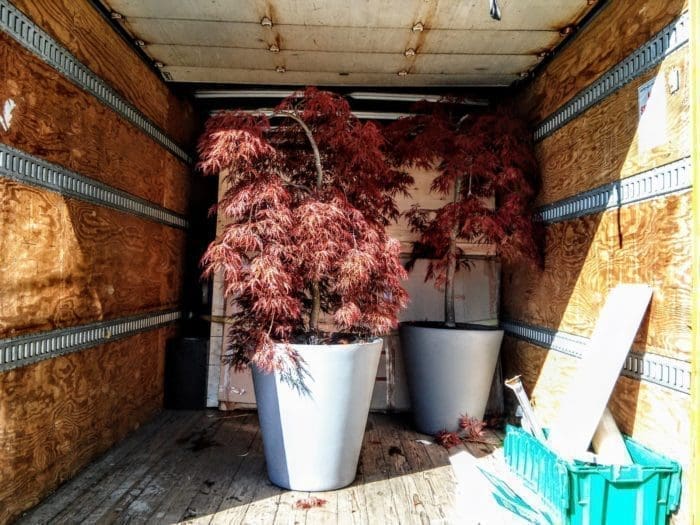
These plants are too large for standard boxes. Wrap the pot in a garbage bag secured with tape to contain the soil, then loosely drape a bedsheet over the foliage. Tie it gently with twine, being careful not to compress the leaves. Transport these plants upright in your vehicle, braced between heavier items so they cannot tip over. Fiddle leaf figs are particularly sensitive to changes in light and temperature, so expect some leaf drop after the move and give them time to recover.
Ferns
Ferns thrive in humidity and struggle in dry environments. Mist them lightly before packing and place a damp paper towel over the fronds inside the box. Do not seal the box tightly; ferns need airflow. Pack them last and unpack them first, as they are among the least tolerant of being boxed up for extended periods.
Flowering Plants (Orchids, African Violets)
Flowering plants are delicate and their blooms bruise easily. Place them in individual boxes with paper padding around the base of the pot. For orchids, stake the flower spike if it is not already staked, and place a protective paper cone around the blooms. Avoid laying flowering plants on their sides, as this can damage open flowers and cause buds to drop.
Protecting Plants from Temperature Extremes
Temperature is one of the biggest threats to plants during a move. Most houseplants are tropical in origin and suffer damage below 10 degrees Celsius. In BC, winter moves require extra precautions. Pre-heat your vehicle before loading plants, and never leave them in an unheated car or truck for extended periods.
Summer heat can be equally dangerous. A closed vehicle in direct sunlight can reach over 50 degrees Celsius inside, which will cook your plants in minutes. Park in the shade whenever possible and crack a window if you need to leave the car briefly.
For long-distance moves, consider transporting plants in a climate-controlled part of the vehicle rather than in the back of a moving truck, where temperatures are unregulated.
How to Successfully Replant Them at Your New Property
Once you have made the long journey to your new property, it is finally time to set your plants free. Prioritize unpacking them first; that way, they can be cared for immediately and be given a chance to acclimatize to their new environment.
Carefully remove your plants from their plastic containers and plant them in the same pots they were once in before the move. Your plants can suffer from transplant shock, so it is best to give them time to recover slowly. A move is stressful for anyone, including your plants. They are living beings, after all!
Unpacking Priorities and Recovery
When you arrive at your new home, unpack plants before almost anything else. Place them in a spot with indirect light and stable temperature for the first few days. Avoid putting them directly in a sunny window right away, as the sudden change in light intensity can cause leaf burn on top of the stress they have already experienced.
Water each plant lightly upon arrival and then return to your normal watering routine. Watch for signs of stress such as yellowing leaves, drooping, or leaf drop over the following two weeks. Most plants will bounce back with consistent care. Hold off on repotting or fertilizing for at least three to four weeks to allow roots to settle.
If a plant looks like it is not recovering, trim away any dead or dying foliage to redirect the plant’s energy toward healthy growth. Be patient. Some plants, especially fiddle leaf figs and orchids, can take a month or more to fully adjust to a new environment.
Contact Us Today
Do you have any questions regarding an upcoming move? Perhaps you need to schedule a relocation service or reserve storage space? If so, do not hesitate to call Simple Moves at (604) 670-6050 or fill out our online contact form. You can also view our website for more practical moving tips, as seen on our blog.
Common Mistakes That Kill Plants After a Move
Even experienced plant owners make avoidable errors during a relocation. The most common mistake is overwatering immediately after the move. Plants that look wilted or droopy are often responding to light and temperature changes—not drought. Adding excess water to an already-stressed root system can cause root rot, which is far more damaging than temporary wilt. Check the soil moisture with your finger before reaching for the watering can.
Another frequent error is placing plants in drastically different light conditions. A fern that thrived in a north-facing window at your old apartment will struggle if placed in a south-facing window at the new home. Observe the natural light patterns in each room for a day or two before committing to permanent plant placement. Gradual light transitions give plants time to adjust their leaf orientation and chlorophyll production.
Finally, avoid placing newly moved plants near heating vents or drafty doors. Rapid temperature fluctuations stress tropical houseplants more than a consistent cool room does. If your new home runs forced-air heating, keep plants at least one metre away from vents and consider a small humidifier to offset the dry air.
What to Do With Plants You Cannot Take
If you are moving long distance or across provincial borders, some plants may not survive the journey or may be restricted by agricultural regulations. Rather than abandoning them, offer healthy specimens to neighbours, friends, or local plant-swap groups on social media. Many communities in the Lower Mainland have active plant exchange groups where your well-loved monstera or pothos can find an appreciative new owner.
For plants that are too large to give away easily, consider taking cuttings and propagating them in water during the move. A few healthy cuttings wrapped in damp paper towel and sealed in a plastic bag take up almost no space and give you a fresh start at your new home without the logistical challenge of moving a full-sized plant.
Let Simple Moves Handle Everything Else
While your plants need personal attention, the rest of your belongings are in good hands with Simple Moves. As a full-service moving company, we provide both the crew and the trucks for a smooth, efficient relocation. Get a free quote or call (604) 398-4680 today.
Seasonal Timing for Moving Plants in BC
The time of year you move has a significant impact on plant survival. Spring and early fall are ideal windows for relocating houseplants in British Columbia—temperatures are mild, daylight hours are moderate, and plants are either entering or exiting their active growth phase. Moving plants during the summer heat or winter cold introduces additional stress that can tip a borderline-healthy plant into decline. If you must move during extreme weather, transport plants in your climate-controlled personal vehicle rather than the moving truck, where temperatures can swing dramatically during loading and unloading.