




4 Checkmarks, moving day
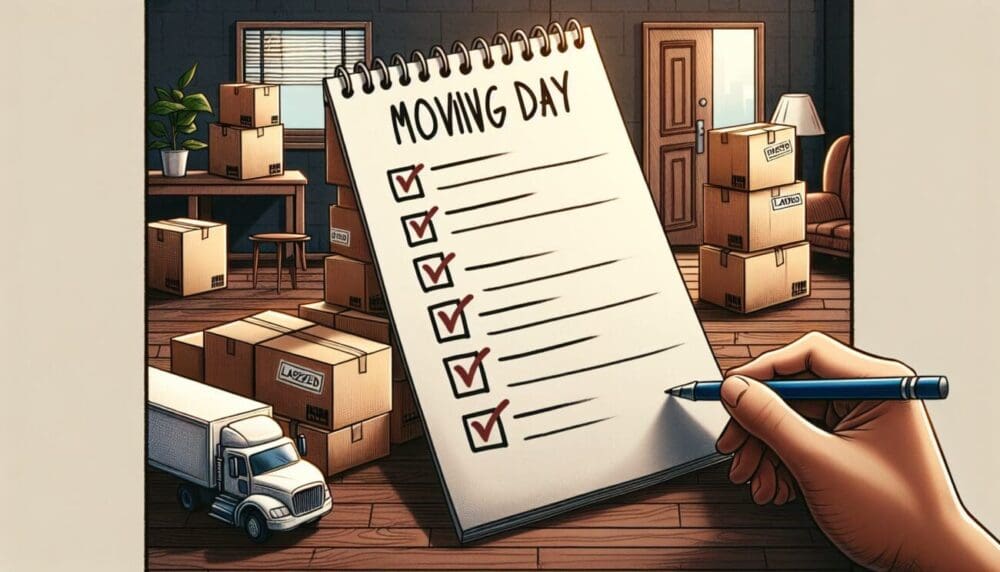
As you prepare to embark on a new journey by moving home, the exhilaration of change awaits. It’s not just about packing boxes but transferring your life – your history, routines and memories – from one place to another. While this transition can bring about anxiety, careful planning and strategy can make the move manageable and stress-free. We’ve used our extensive moving industry experience to create four key tips to assist you. It works whether you are moving locally or long distance. Over the years, we’ve witnessed the challenges people face during a move and have gathered invaluable insights. Our tips are grounded in real-life experiences and have been vetted for effectiveness. Whether you’re moving locally or nationally, our advice is designed to guide you through every stage of the move. As you begin this life transition, know that you’re not alone – we’re here to provide the tools you need for a successful move. Now, let’s explore these four vital tips for a smooth move.
1. Start Your Moving Plan Six Weeks in Advance
Don’t wait to start preparing for moving at the last minute. Instead, start planning your move at least six weeks in advance, going over every room in your old home and planning where everything will go in your new home. If things don’t match or fit in your new home, you can put them in storage, and sell or donate them instead of going through the trouble of moving them to your new home and learning the hard way they need to go.
2. Declutter and purge your belongings
Reviewing your possessions can help you declutter and remove unused things so you don’t have to worry about moving them to your new house. If you have any unwanted items, organize a yard sale, sell them on Marketplace, or donate them to Goodwill. If you have not used something in years in your old home, it is very likely to stay unused in your new home, so don’t bother moving it. After decluttering, start packing and labelling everything with its new location and any special handling instructions to prevent damaging your things.
Also, check out:
Experience Stress-free Moving with Simple Moves & Storage Langley Movers(Opens in a new browser tab)
How to Plan a Stress-Free Office Relocation in Vancouver(Opens in a new browser tab)
The Benefits of Decluttering Before Your Big Move Out of the City(Opens in a new browser tab)
How much to Tip Movers Canada?(Opens in a new browser tab)
Moving Companies for Seniors(Opens in a new browser tab)

3. Pack A First-Night Box
Unpacking and putting everything where it should go in your new home can take days, so pack an overnight bag with an Essentials Box. Toiletries, towels, medicine, one or two change of clothes, essential cleaning supplies, and basic electronics and chargers should always be handy. Pack these in your car and take them with you. You never know what you’ll need and taking a nice shower and putting a fresh pair of clothes on after a whole day of hauling boxes is always nice!
4. Hire Expert Movers
It may seem cost-effective to try and move on your own, but believe us when we say it will eventually be more expensive or at least more time-consuming. Between renting a moving van, buying plenty of boxes, buying moving equipment and blankets, and asking all your friends and family for help will become an actual expense (plus all the pizza and beer you’ll need to give them), professional moving company with knowledgeable staff, local expertise (don’t want to get a truck stuck on a big hill) and logistical support that will do the heavy lifting. You’ll save lots of time and headaches, and you can have your new home set up faster than expected.
Your Detailed Six-Week Moving Plan
Starting six weeks out is great advice, but what exactly should you be doing each week? Here is a week-by-week breakdown that our most organized customers follow for a smooth relocation in 2026:
Week 6: Research and book. Get quotes from reputable full service moving companies. Confirm your move date with Simple Moves by calling (604) 398-4680. Begin sorting belongings room by room and identifying items to donate or discard.
Week 5: Start decluttering. Work through one room per day. List items for sale on Facebook Marketplace or Craigslist. Schedule a donation pickup with a local charity. The more you remove now, the less you move later.
Week 4: Begin packing non-essentials. Pack seasonal items, books, decorative objects, and rarely used kitchen gadgets. Purchase or gather packing supplies — boxes, tape, bubble wrap, and markers. If you opted for Simple Moves’ packing service, confirm the packing date.
Week 3: Handle logistics. Notify your utility providers (BC Hydro, FortisBC, internet, phone) about your move. Set up mail forwarding with Canada Post. Update your address with banks, insurance providers, and subscriptions. If your building requires elevator booking, arrange it now.
Week 2: Pack most remaining items. Leave out only daily essentials — toiletries, a few outfits, basic kitchen items, and important documents. Prepare your essentials box for moving day. Confirm all details with your moving team.
Week 1: Final preparations. Finish packing. Defrost and clean out your refrigerator. Charge all devices. Confirm parking arrangements at both locations. Walk through your home and label any items that require special attention or placement at your new home.
Decluttering Strategies That Actually Work
Decluttering is universally recommended before a move, but many people struggle with the actual process. Here are proven strategies that make letting go easier:
The one-year rule. If you have not used, worn, or thought about an item in the past year, you are unlikely to need it in your new home. This simple rule eliminates the emotional deliberation that slows down decluttering.
The box method. Place questionable items in a sealed box with a date on it. If you have not opened the box to retrieve anything within one month, donate the entire box without opening it again.
Room-by-room approach. Decluttering an entire house is overwhelming. Breaking it down room by room makes the task manageable. Start with the easiest room — usually a guest bedroom or storage area — to build momentum before tackling emotionally challenging spaces like kids’ rooms or personal collections.
The four-box method. Place four boxes in each room labelled Keep, Donate, Sell, and Discard. Every item must go into one of the four boxes. Nothing stays in limbo. This system forces decisions and prevents the pile of “maybe” items that defeats the purpose of decluttering.
Digital first. Scan important documents, photograph sentimental items you are not keeping, and digitize media collections. You preserve the memories without the physical storage burden.
How to Pack Like a Professional Mover
Professional movers pack hundreds of homes each year, and they follow consistent techniques that protect belongings and speed up unpacking. Here are the insider tips our Simple Moves crews use:
Heavy items in small boxes. Books, tools, canned goods, and other heavy items should go in small boxes (1.5 cubic feet). This keeps individual box weights manageable and prevents injuries and box failure. Light items like linens, pillows, and clothing go in large boxes.
Fill every gap. Empty space inside a box allows contents to shift during transport, increasing the risk of breakage. Use packing paper, bubble wrap, towels, or clothing to fill gaps and cushion contents. A properly packed box should not rattle when shaken gently.
Wrap plates vertically. Plates are stronger on their edges than flat. Wrap each plate individually in packing paper and stand them vertically in the box, like records in a crate. This dramatically reduces the risk of cracking.
Use wardrobe boxes for clothing. Rather than folding and boxing your hanging clothes, wardrobe boxes allow garments to hang during transport, arriving wrinkle-free and ready to go straight into your new closet.
Label on multiple sides. Write the destination room and a brief description on at least two sides of every box. When boxes are stacked, you can identify contents without unstacking. Use a colour-coding system — assign each room a colour of tape or marker — for instant visual identification.
Tape an X pattern. Reinforce the bottom of every box with tape in an H or X pattern. This prevents the bottom from giving way under weight, especially for heavier boxes.
Why Hiring Full Service Movers Actually Saves You Money
The decision to hire professional movers versus doing it yourself often comes down to cost. While DIY moving may seem cheaper on paper, the true costs tell a different story:
An average local household move commonly lands around $1,500–$2,800. Smaller apartment moves can cost less, while large, long-distance, or difficult moves can cost more. These prices are a helpful guide based on similar moves. Every move is different, so we’ll give you a free, personal quote before anything is booked—so you know exactly what to expect.
With a full service move from Simple Moves, you get professional crews, fully equipped trucks, loading and unloading, furniture protection, and the peace of mind that comes from knowing your belongings are in expert hands. For smaller moves, we offer right-sized solutions that provide professional service without paying for more than you need.
Ready to experience a smooth, stress-free moving day? Call Simple Moves at (604) 398-4680 or get your free quote online today.
{
{
}
},
{
}
},
{
}
},
{
}
}
]
}
Frequently Asked Questions About Moving Day
How early should I start planning my move?
Start planning at least six weeks before your move date. This gives you time to book movers, declutter, pack systematically, and handle logistics like utility transfers and address changes. During peak summer months, starting even earlier is recommended.
What should I pack in my essentials box for moving day?
Your essentials box should include toiletries, medications, phone chargers, a change of clothes, basic cleaning supplies, towels, toilet paper, paper plates and utensils, important documents, and any items you will need immediate access to on your first night in your new home.
Is it worth hiring professional movers for a small move?
Yes, even small moves benefit from professional help. Simple Moves offers small move services for single-item and small apartment relocations. Professional movers have the equipment, experience, and insurance to handle your belongings safely, and the time savings alone often justify the cost.
How do I protect fragile items during a move?
Wrap each fragile item individually in packing paper or bubble wrap. Pack plates vertically, fill all gaps in boxes with cushioning material, and clearly label boxes as fragile. Use small to medium boxes for heavy or breakable items. Professional packing services from Simple Moves provide the highest level of protection.
Get a Free Moving Quote From Simple Moves
Simple Moves is a full-service moving company serving Metro Vancouver, the Fraser Valley, and all of British Columbia. We provide the experienced movers and the trucks — you do not need to rent a vehicle or recruit friends. Whether you are moving across the street or across the province, we make every move simple.
Call (604) 398-4680 or request a free quote online today.